Healthcare billing
Delivered engagement. Coralsoft designed and built this product end to end; figures below retain their evidence level.
What was in place before we started.
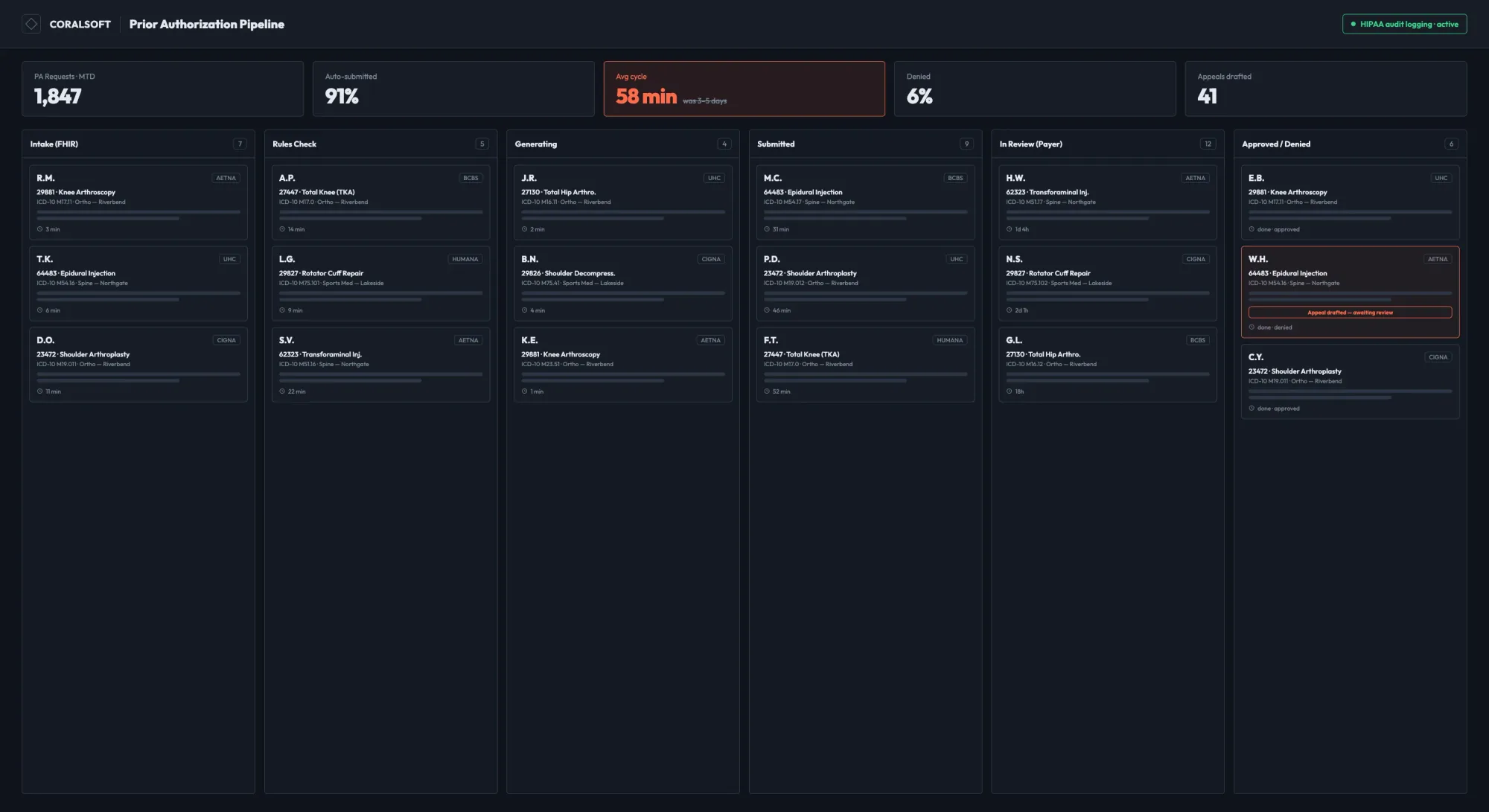
An autonomous AI agent — acting inside payer portals, generating documents, and tracking statuses, not a chatbot — that runs the full HIPAA-compliant prior authorization cycle for a medical billing company serving 22 outpatient clinics.
The client processes roughly 1,900 prior authorization (PA) requests per month — a mandatory step where a clinic must obtain a payer's approval before performing a procedure, or the claim gets denied. A team of 11 billing specialists manually pulled patient data and procedure codes (CPT/ICD-10) from the EHR, figured out which forms a given payer required (each with its own portal and rules), filled them out, tracked status, and drafted appeals when requests were denied.
The average PA cycle took 3–5 business days, and 18% of requests stalled due to simple form errors or lack of tracking — the clinic often found out about a denial only after the procedure had already taken place.
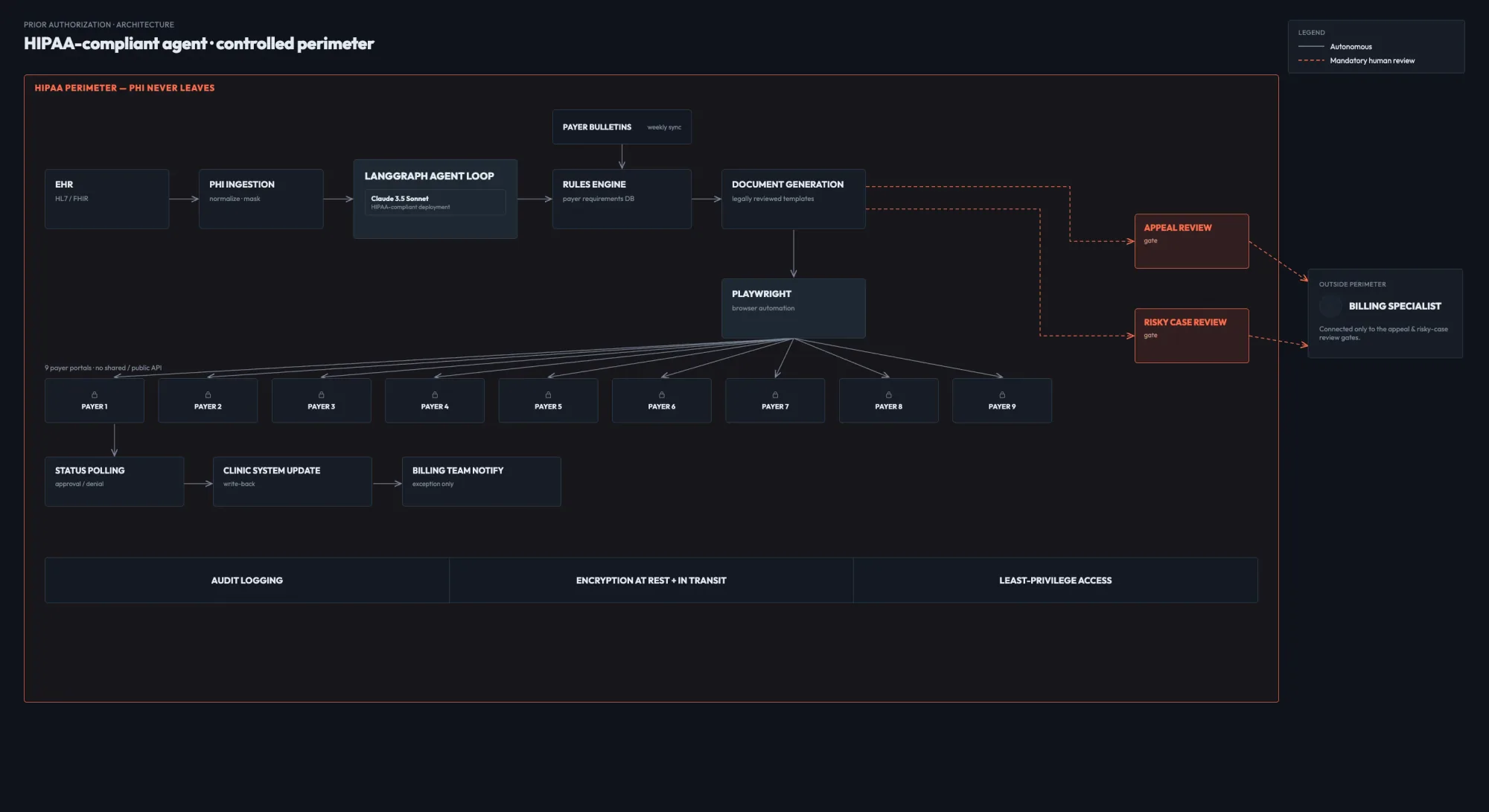
HIPAA compliance: every agent action involving PHI (protected health information) had to be logged, encrypted at rest and in transit, with least-privilege access, and no patient data could leave the controlled perimeter.
- Timeline
- 6 months reconstructed
- Team
- 5 people reconstructed
- Budget
- $25k – $35k reconstructed
- Platforms
- 2
Each constraint, and what we did about it.
Outcome, with the source of every figure.
How the system fits together.
How it was sequenced.
Discovery & architecture
Pulls data from the EHR (HL7/FHIR interface): patient demographics, insurance plan, the procedure ordered, CPT/ICD-10 codes, and the physician's clinical notes.
- EHR data pull
Core build
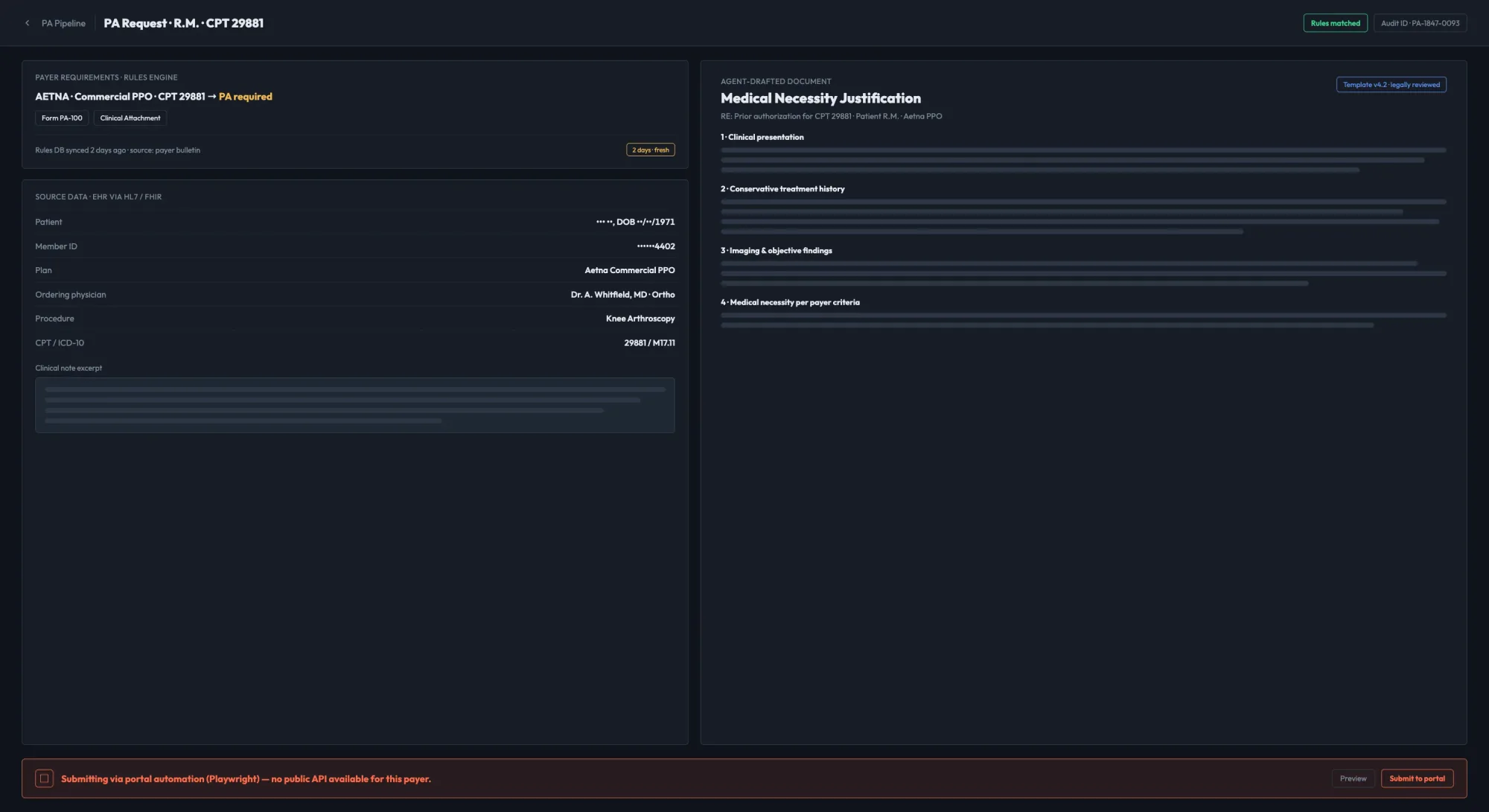
Checks a rules database (updated weekly from payer bulletins) to decide whether PA is required and which forms and supporting documents are mandatory for that specific plan and procedure.
- Payer requirement engine
Integrations & data
Fills out the payer-portal form via browser automation (where no API exists), attaching a medical-necessity justification the agent drafts from the physician's notes using a legally reviewed template.
- Request generation & submission
Hardening & QA
Periodically checks the portal/email notifications, updates the clinic's internal system, and notifies the billing team of the outcome.
- Status tracking
Launch & handover
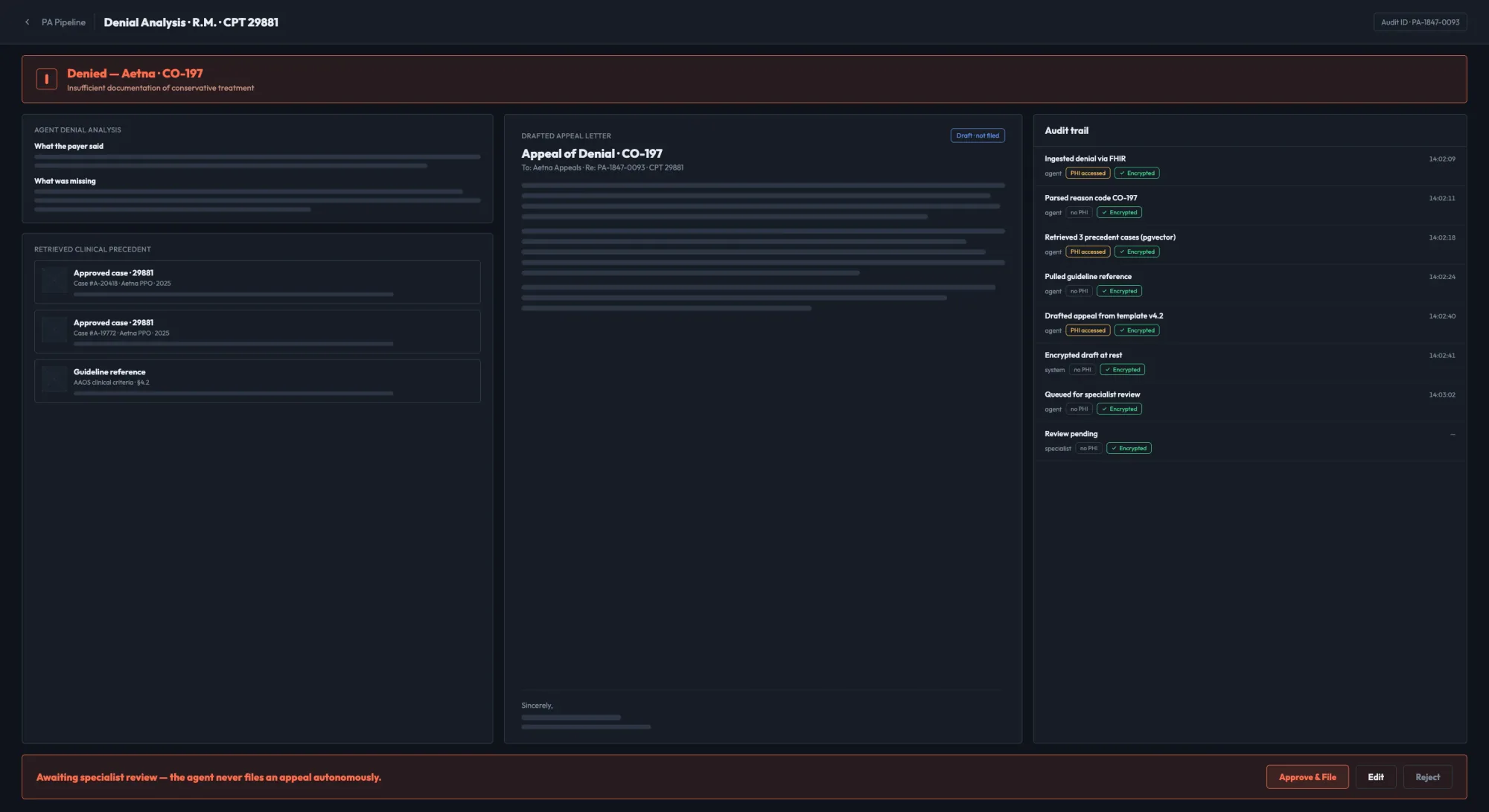
On denial, analyzes the denial reason, pulls a relevant clinical precedent, and automatically drafts an appeal letter for human review — the final decision to file an appeal always stays with a specialist.
- Appeal drafting
More work like this.
Every case study is a Coralsoft delivery story, with the evidence behind each figure kept visible.